
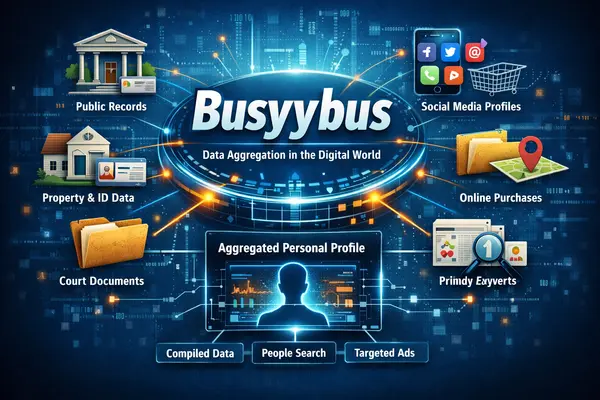
The latter term busyybus is one that you may have encountered in the process of getting information on your activities on the internet in relation to privacy. Unless you know what it is and how it applies to you, then it is time to clear up. This paper will define this term and how your personal data is being transferred across the web and, more importantly, provide you with steps that you can take to control your online presence. We will discuss the things of public records, data brokers, and the simple, non technical manner of regaining control of your privacy.
Key Takeaways
-
The term busyybus is often used to describe the idea of your personal data being collected from many sources and compiled into a single profile.
-
Your digital footprint is everything you leave behind online, from social media posts to hidden data collected by websites.
-
Public records (like property deeds or court documents) are legally available information that forms a base layer of your online identity.
-
You have more control than you think. Simple steps like adjusting privacy settings and opting out of data broker sites can make a big difference.
-
Managing your online presence isn’t a one-time task; it’s an ongoing habit of being mindful about what you share.
What Does “Busyybus” Actually Mean?
First, it should be remembered that, busyybus is not a certain site or company you have to log into. Imagine that it is more of an idea or even an abbreviation that people use when referring to the collection of our personal information. It is the practice of gathering and synthesizing information about social media, online shopping, and the general records and selling them. This concept is the initial step in realizing the way your data can get away with you.
Understanding Your Digital Footprint
Imagine your online activity like footprints in the sand. Your digital footprint is the collection of all those traces. There are two main kinds:
-
Active Footprint: Things you intentionally put online, like Facebook photos, Tweets, or blog comments.
-
Passive Footprint: Data collected without you actively providing it, like your IP address (which reveals your general location), your browsing history, or what apps you use.
Together, these footprints create a surprisingly detailed picture of your life, interests, and habits.
How Public Records Fit Into the Picture
Public records are the official documents kept by government agencies. They’re meant to create transparency. Common examples include:
-
Birth, marriage, and divorce certificates
-
Property ownership and home sale records
-
Court cases and business licenses
-
Voter registration information
Because these records are often public, the information in them can be legally accessed and used by data collection companies. This is why your name and address from a home purchase can easily become part of your searchable online profile.
The Data Aggregation Process (How Your Info Gets Compiled)
This is the real-world process behind the “busyybus” concept. Data brokers are the companies that are automated software and always scan and gather the information that was mentioned earlier. As a puzzle, they reconstruct it on millions of individuals. Such profiles may contain your approximate age, previous addresses, relatives and hobbies. They are then applied to such purposes as targeted advertising or background checks or people-search websites.
Where Does This Aggregated Data Come From?
-
Federal, state, and county public record databases
-
Social media platforms and networking sites
-
Your online shopping and loyalty card history
-
Surveys, sweepstakes entries, and magazine subscriptions
-
The “cookies” on your browser that track which websites you visit
Taking Practical Control of Your Online Privacy
Good privacy isn’t about disappearing from the internet—it’s about making smart choices. It means knowing what’s out there, deciding what you’re comfortable with, and locking down the rest. You get to set your own boundaries.
Actionable Steps to Manage Your Digital Footprint
Ready to take action? Start here:
-
Google Yourself: See what anyone else can find by searching your name, your phone number, and your email address.
-
Lock Down Social Settings: Go through the privacy settings on Facebook, Instagram, LinkedIn, etc. Make your profiles “Friends Only” or private.
-
Unsubscribe and Delete: Unsubscribe from old newsletters and close accounts for online stores or services you no longer use.
-
Think Before You Share: Get in the habit of asking, “Do they really need this information?” before filling out an online form.
How to Handle Data Broker and People-Search Sites
These sites are the most visible result of data aggregation. To get your information removed:
-
Find the major data broker websites (a quick search for “data broker opt-out list” will help).
-
Visit each site, find their opt-out page (usually in the “Privacy” or “Your Choices” section).
-
Follow their specific instructions, which often require email confirmation.
-
Be patient and repeat this process every few months, as your information can be re-added.
Public Records vs. Private Data: What’s the Difference?
It helps to know what you can and can’t control.
| Public Records | Private Personal Data | |
|---|---|---|
| Source | Government agencies | Your personal activity (emails, DMs, app usage) |
| Access | Legally available to the public | Controlled by you and the platform’s privacy policy |
| Example | A home deed filed at the county office | Your private Instagram direct messages |
| Your Control | Very limited; requires legal action to seal | High; managed by your settings and choices |
Fortify Your Accounts: Beyond the Password
Your data is only as safe as your weakest password. The best practice is to:
-
Use a unique, strong password for every important account. A password manager app is the easiest way to do this.
-
Turn on Two-Factor Authentication (2FA) everywhere you can. This adds a second step—like a code texted to your phone—to log in. It’s the single biggest upgrade to your account security.
What to Do About Old or Wrong Information Online
Found an old address or a misspelled name?
-
On a Data Broker Site: Use their official opt-out process.
-
On a Business or Personal Website: Contact the website owner directly and politely ask for a correction or removal.
-
In Google Search Results: Google has a process to request the removal of certain sensitive personal information (like ID numbers or bank accounts) from search results.
Building Better Habits to Protect Future You
Prevention is the best medicine for your digital health.
-
Scrutinize App Permissions: When an app asks for access to your contacts or location, deny it unless it’s absolutely necessary for the app to function.
-
Choose Privacy-Focused Tools: Consider using a web browser like Firefox or a search engine like DuckDuckGo that blocks trackers by default.
-
Keep Software Updated: Regularly update your phone, computer, and apps. These updates often include critical security fixes.
FAQs: busybus
Is busyybus a real site I need to check?
No. It’s best understood as a concept representing how data is gathered, not an actual website you can visit.
Am I able to do away with my digital footprint?
Practically, no–particularly copied or archived information. It is a matter of reduction and control and not complete erasure. You will be able to place a huge footprint and leave what is left much more difficult to locate.
What is the most frequently used misjudgment with privacy on the Internet?
S-he uses the same password on several accounts. When a single site is hacked, the criminals will use the same password on your email, social media and bank accounts.
The question is how often to revise my privacy settings?
Add a reminder to make sure to adjust the settings of your primary accounts email social banking at least once a year. Policies and features of companies are changed frequently.
Do I become anonymous with the incognito mode?
Not really. It just prevents the existence of history and cookies on your computer. Even your internet provider, your employer, or the site itself may still monitor what you are doing.
Conclusion
Although the expressions such as busyybus may appear technical, they only reflect a contemporary fact the fact that our personal information has been under continuous gathering. You do not have to be a technology guru to operate it. It is possible to navigate around the digital world by realizing the purpose of the public records, actively addressing your digital footprint, and developing smarter habits related to online privacy. You can begin with one easy task today, such as a password audit or checking the privacy of your social media, and continue. Privacy is not a futile endeavor.
